The Best Fluffy Blueberry Pancakes recipe you will fall in love with. Full of tips and tricks to help you make the best pancakes.





The best avocado is the one that will be ripe when you want to eat it. A gentle feel tells you more than skin color.
The images above illustrate what to look for.
1. Start with the gentle squeeze test
Cradle the avocado in your palm and apply light, even pressure. Avoid poking it with your fingertips, which can bruise the flesh.

| How it feels | What it means | Buying decision |
|---|---|---|
| Hard, with no give | Unripe | Choose for later in the week |
| Firm, with a little give | Approaching ripeness | Choose for the next few days |
| Yields slightly to gentle pressure | Ripe | Choose for eating today |
| Mushy or unevenly soft | Possibly overripe or bruised | Pick another |
Timing varies with temperature and the fruit’s starting condition.
2. Use color as a clue
Hass avocados—the common ones with pebbly skin—usually darken as they ripen. But some varieties stay green even when ready to eat. A dark avocado can still be hard, so always check the feel.
3. Check for damage
Look over the entire avocado. Pass on fruit with sunken areas or patches that feel much softer than the rest. Small surface scuffs on thick-skinned Hass avocados are usually cosmetic and don’t necessarily affect the flesh.

4. Buy a mix for the week
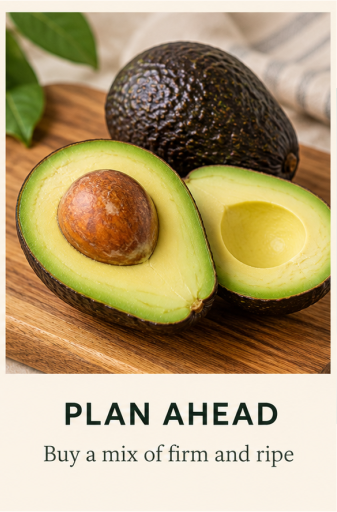
Choose one ripe avocado for immediate use and a couple of firmer ones for later. This gives you a better chance of having one ready when you need it.
5. Help them ripen at home
Leave firm avocados on the counter and check daily. To speed things along, put them in a paper bag with an apple. Skip the microwave or oven: heat can soften an avocado without developing its ripe flavor and creamy texture.
Once ripe, refrigerate whole avocados and aim to use them within two to three days. Wash the skin before cutting.